

A Guide to the Boston Marathon
A Guide to the Boston Marathon
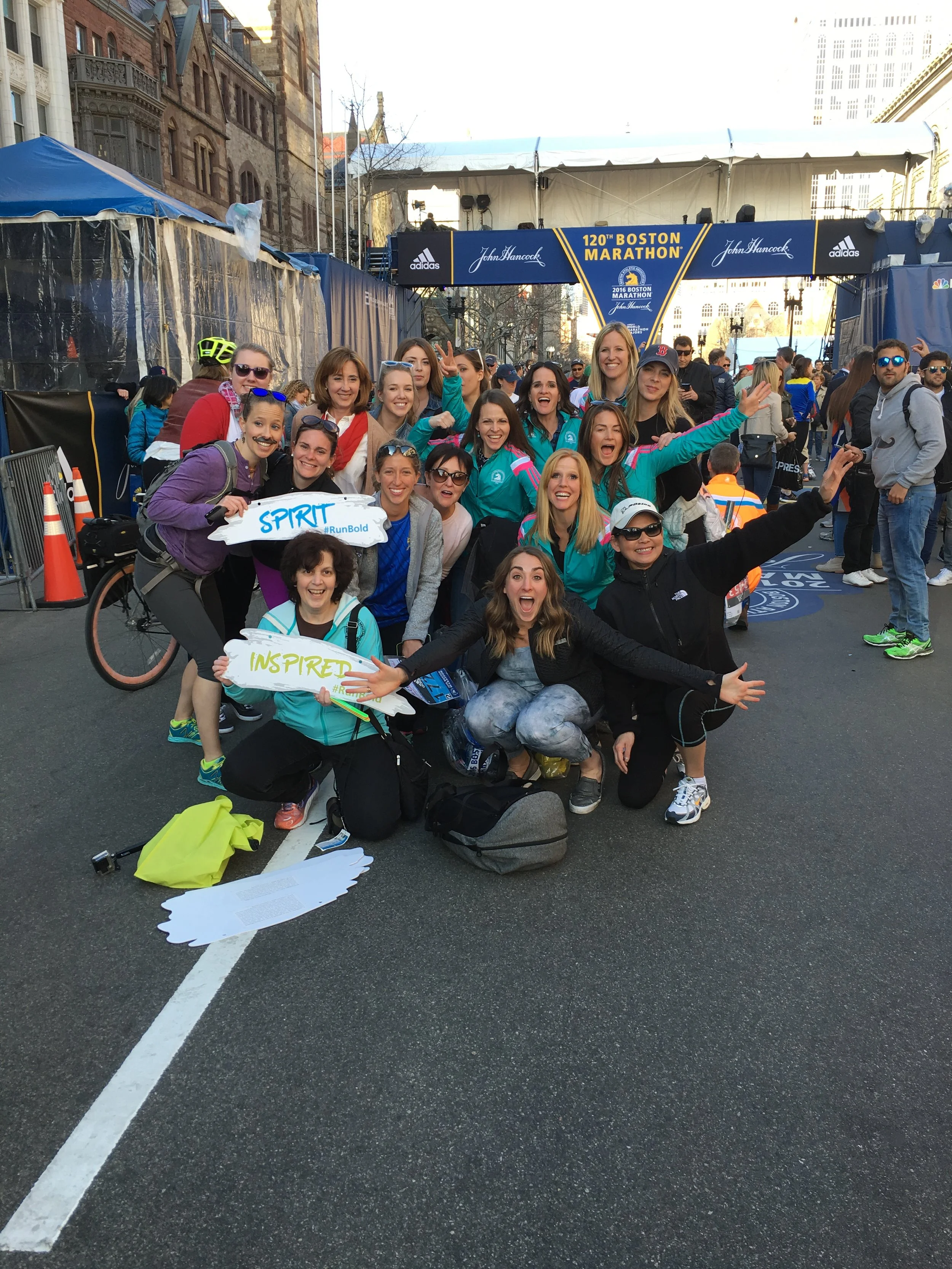
Let's start here: if you're running Boston, you earned this bib. This isn't a race you sign up for on a whim — you ran a qualifying time, you waited to see if you got in, and now you're standing at the start line of the oldest annual marathon in the world. OR, you raised a SHIT TON OF MONEY FOR CHARITY to get that bib. (OR, you’re one of the few dozen locals that get a bib from a friend of a friend, a neighbor, or at work because no one wanted it. Those stories make me laugh. To be able to run Boston because no one else wanted the bib is perfect.) But either way, Boston is a big deal, and this guide is here to make sure the logistics don't get in the way of you enjoying it.
Boston is different from Chicago and similar to NYC: it's point-to-point, which means where you stay and how you get to the start take actual planning. Here's everything you need to know, gang.
Boston Marathon Information
Date: Monday, April 19, 2027 (Patriots' Day, the third Monday in April)
Time: REALLY, PAINFULLY LATE START. Wheelchair and handcycle divisions start around 9:02-9:30 am, pro women around 9:47 am, pro men shortly after. The normal runners start in staggered waves beginning at 10:00 am, roughly 25 minutes apart, with the final wave off by about 11:15-11:30 am. (A LITERAL POX ON ALL RACE ORGANIZERS HOUSES WHO HAVE PEOPLE START MARATHONS AT 11:30AM.) Exact wave/corral assignments post in March — this structure repeats every year, so plan around it loosely until then.
Start: Hopkinton, MA, at the start line on Main Street, about 26.2 miles west of Boston.
Finish: Boylston Street, Copley Square, in Boston's Back Bay neighborhood.
How To Get To The Starting Line
This is the part that trips people up: there is no ride-share, no personal car, and no walking to the start of the Boston Marathon. The ONLY way to get to Hopkinton is the official B.A.A. buses, which load on Charles Street, between the Public Garden and Boston Common. You need your bib and wristband to board — no exceptions.
Bus loading is tiered by wave: Wave 1 around 6:45 am, Wave 2 around 7:30, Wave 3 around 8:15, Wave 4 around 9:00, and the last bus pulls away at 9:30 am SHARP. The ride out to Hopkinton takes 45 minutes to over an hour depending on traffic, and there are no bathrooms on the bus, so use the ones at Charles Street before you board.
Gear check happens at Charles Street, before you get on the bus. Only the clear plastic bag from your race packet is allowed on the bus and into Athletes' Village — no backpacks, no exceptions. That bag rides with you to the Village and then gets trucked to the finish, where you'll pick it up after the race.
The buses drop you at Athletes' Village, which is the field at Hopkinton High/Middle School. It's mostly open grass with one big tent for water and Gatorade, and the bathroom lines get long by mid-morning (15-20 minutes isn't unusual). There's also basically no cell signal in the Village, so lock in your spectator meetup plans BEFORE you get on the bus. Hopkinton also tends to run 10-15 degrees colder than Boston, so dress in throwaway layers you don't mind leaving behind.
When your wave is called, you'll walk from the Village down Grove Street to Main Street — about 0.7 miles — to the actual start line. Budget real time for this walk; it's not instant.
TIP: Book your hotel up to a year in advance if you can. Back Bay rooms during marathon weekend routinely run $300-$600+ a night, and the closest properties sell out first. BUT, use local transportation. You don’t have to stay in Back Bay.
Where to Stay for the Boston Marathon
Here's the thing every Boston guide will tell you and it's true: don't bother trying to stay near the start. Hopkinton is a small town 26 miles from Boston, and even if you found a hotel out there, you'd still need to get yourself to the Charles Street bus loading area on race morning — so it doesn't save you anything. Every experienced Boston runner bases themselves around how to get to Back Bay or around Boston Common and works the buses from there.
That means your hotel search really comes down to one question: how close can you get to Charles Street (where you catch the bus out) and Boylston Street (where you cross the finish line)? OR, how confident you with local transportation and then stay further away and take the train in the morning. (Boston has great light rail. Use it.) Good news — in Back Bay, those two points are close enough that most hotels in this list work for both.
Back Bay / Copley Square — Closest to the Finish Line and the Buses
This is the only lodging strategy that makes sense for Boston. Here's the list, mixed by price point, all within a short walk of both Boylston Street and the Charles Street bus pickup.
$$$ Hilton Boston Park Plaza — 0.3 miles from the Charles St. bus pickup, 0.2 miles from the finish — informally known as "the Runner's Hotel"
$$$ Four Seasons Boston / Westin Copley Place — one block behind the finish line
$$$ Fairmont Copley Plaza, Boston — 0.2 miles from the finish, 2-minute walk to Copley Station
$$Sheraton Boston, a Marriott Hotel — 0.2 miles from the finish, 2-minute walk to Copley Station
$$ The Lenox Hotel — literally steps from the finish line (about 500 feet)
$$ Revere Hotel Boston Common — 6-minute walk to the bus pickup, 14-minute walk to the finish
$$ Hotel AKA Boston Common / AKA Back Bay — 0.8-0.9 miles from the finish; suite-style, good for families
$ Charlesmark Hotel — right on Boylston Street, about 1 minute from the finish
$ Found Hotel Boston Common / Courtyard Boston Copley Square — both under 0.3 miles from the finish and the expo
Whichever hotel you pick, make sure it's walkable or an easy train ride to Charles Street — that's non-negotiable since the buses are your only way to the start.
Course Notes & What to Expect
The Deceptive Downhill Start
Boston drops more than it climbs overall — about 1,275 feet of net descent versus 815 feet of gain — and the first four miles out of Hopkinton are sharply downhill. This is the single most common reason people blow up in the back half of Boston: the downhill start makes an unsustainable pace feel easy. Do not bank time here.
The Wellesley Scream Tunnel (Mile 12-13)
Right outside Wellesley College, you'll hit a wall of sound from students cheering, holding signs, and yes, offering kisses. It's genuinely one of the most fun moments of the race — and it comes right before a downhill stretch, so enjoy it, but don't let the adrenaline talk you into speeding up.
The Newton Hills (Mile 16-20) and Heartbreak Hill (Mile 20-21)
Starting around mile 16, you'll hit four rolling climbs over about five miles — this is the Newton Hills, and it's where Boston starts to earn its reputation. The last and steepest of them is Heartbreak Hill, which starts just past mile 20: about half a mile long, roughly 5% grade, arriving exactly when your legs are the most cooked. Know it's coming. Save something for it.
Tips for Running the Boston Marathon
Go into race day hyper-hydrated
Start hydrating seriously 2-3 days out, not just the morning of. Between the bus ride, the wait in Athletes' Village, and unpredictable New England weather, you want a head start on hydration before the gun ever goes off.
Stay off your feet the day before
You already know this one. Do your shakeout run, then get horizontal. Watch movies. Do nothing. The expo and Boston sightseeing will still be there next time.
Dress for Hopkinton, not for Boston
Hopkinton runs colder than the city, and you'll be standing around Athletes' Village for a while before your wave starts. Wear real throwaway layers — sweats, an old hoodie, gloves, a beanie — and remember only your clear gear-check bag travels with you, so don't wear anything you need to keep.
Respect the bus schedule
The last bus leaves Charles Street at 9:30 am sharp. Missing it means missing the race. Get there early, use the bathroom before you board, and don't cut this one close.
This is a different kind of hard — pace for the hills, not the flats
Because Boston is a qualifier-only race, most of the field lining up with you has trained specifically for this. That's a good thing — but it also means the temptation to go out too hard with the crowd is real. Respect the downhill start, and save your legs for Newton.
Know exactly where your cheer squad will be
Boston runs through eight towns before it ever reaches the city, and because it's point-to-point, your people can actually leapfrog you using the commuter rail — Boston is one of the only majors where your spectators can realistically see you at multiple points along the course if they plan their stops around the T. Confirm exact street corners and which side you'll be running on, since cell service gets spotty in some stretches.
Charge your headphones — and have a backup
Bring a fully charged case and swap earbuds one at a time so you're never without music if you want it. And per usual, run with one ear open — the crowd energy the entire way is part of what makes Boston Boston.
Save something for Heartbreak
Everyone talks about Heartbreak Hill for a reason. Know it's coming at mile 20, right when you're already tired, and mentally rehearse getting up it before race day. Once you crest it, it's mostly downhill into the city.
Right on Hereford, left on Boylston
This is the most famous turn in American marathoning. When you make that final left onto Boylston, the finish line is dead ahead. Save your smile for this moment — you're going to want to remember it.
You can't sit down at the finish
Same as every major — once you cross, you'll want to collapse and they won't let you unless it's the med tent. Keep shuffling forward. Your gear-check bag, blanket, and food are waiting for you down the finish chute.
Eat, then make dinner reservations
Eat everything in your finisher bag, then get real food as soon as you can stomach it. Back Bay is slammed with marathoners at dinner time on Marathon Monday — book ahead if you want an actual table.
Take the time off after
One full week off running, minimum, two if you can manage it. You just ran the oldest marathon in the world. Let your body catch up.
Gear We Love for Boston Marathon Weekend
Boston weather is famously unpredictable — you could get a heat wave or freezing rain, sometimes both in the same decade of running it. Here's what we'd pack, with real product links so you can grab photos when you're ready to add these in.
Throwaway layers for Athletes' Village — (thrift-store finds are the move here, don't buy new)
Arm sleeves for temperature control mid-race — product link
Women's running shoes — Brooks Women’s Adrenaline — product link
Women's running shoes — Nike Pegasus — product link
Handheld hydration flask — product link
Electrolyte tabs — product link
Energy Chews — product link
Sunglasses — product link
Compression socks for recovery — product link
Training for Your Next Boston Bib?
Whether you're chasing a BQ for the first time or coming back to defend the one you already have, CLICK HERE to check out the Badass Lady Gang Training App to build your mileage, speed work, and long runs around your actual goal pace — not a generic chart.
If you want the full structure get a coach in your corner adjusting your plan as your fitness changes, The Team with Coaching ($89.99/month or $599.99/year, cancel anytime) is built for exactly that.
— Coach Kelly
