

"Just drink more water" is the most common hydration advice runners get, and it's also where most hydration guidance breaks down. Over hydrating on a long run can be just as miserable as under hydrating — bloating, cramping, a stomach that won't cooperate, and that sloshy feeling every time your foot hits the ground.
The problem is that hydration advice is almost always generic: drink eight ounces every 20 minutes, drink half your body weight in ounces per day, drink until your urine is pale. All of this misses the actual question — how much fluid is your body losing right now?
Sweat Rate Isn't Universal
Your body size. A 200-pound runner and a 160-pound runner aren't losing the same amount of fluid, even at the same pace.
The heat. A 65-degree morning run and an 85-degree afternoon run are different experiences entirely.
Humidity. High humidity means sweat can't evaporate efficiently, so your body produces more of it trying to cool down — you lose more, faster.
How hard you're working. Easy pace and tempo pace produce different sweat rates.
What you're wearing. Cotton holds sweat; moisture-wicking fabric lets it evaporate.
So when we say "your sweat rate," we mean: you, right now, in these specific conditions, at this specific pace. That number is completely different from your friend's, from a generic chart, or from the number you'll need on a hot race day somewhere you didn't train.
How to Actually Find Your Number (It's Free)
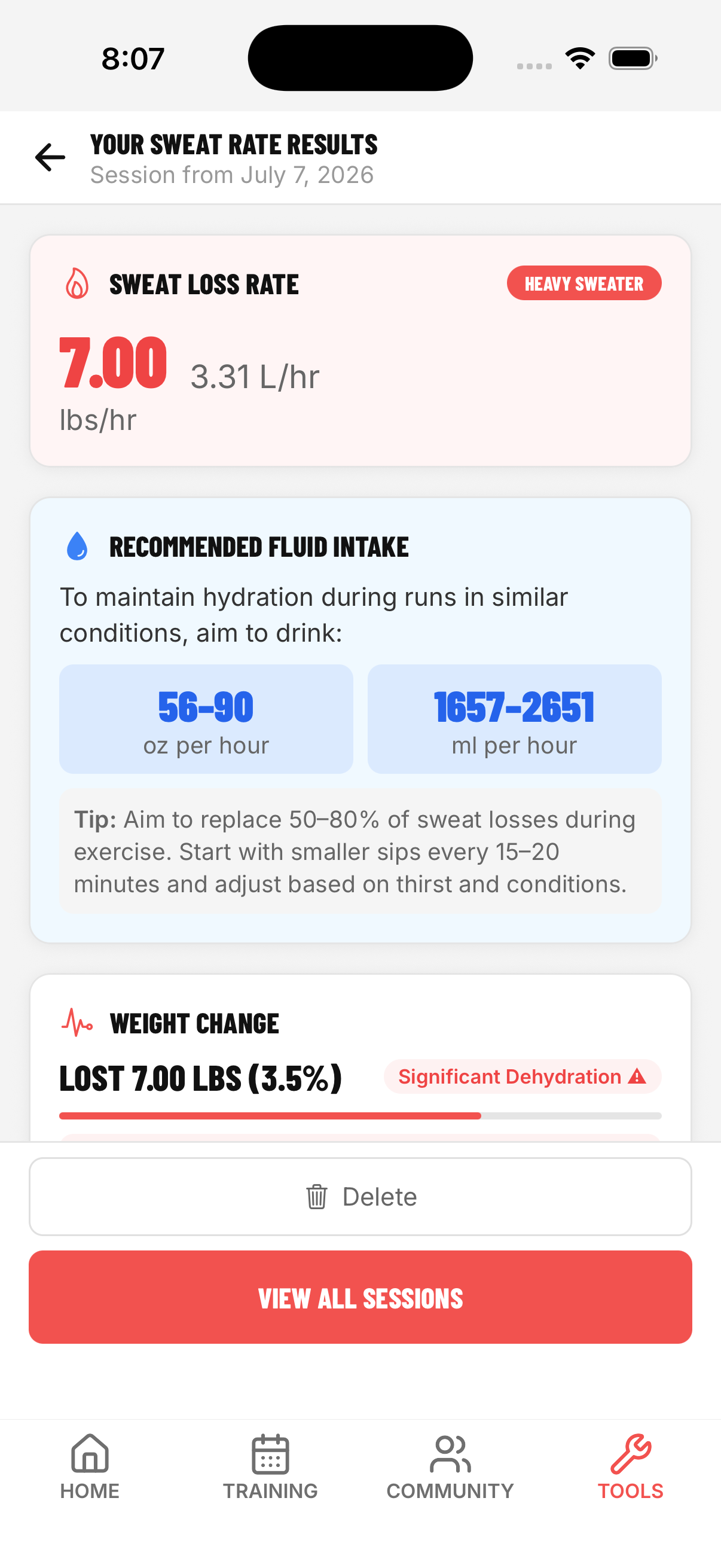
BALG's Sweat Tracking tool is built exactly for this, and it's free — no paywall, open to every tier including Free Community.
Step 1 — before a run, log the conditions: body weight, what you're wearing, intensity (easy/steady/hard), temperature and humidity (your phone's weather app has this). The tool calculates a predicted sweat rate and a ballpark hydration target.
Step 2 — run your planned workout, carrying fluids and fuel as planned. This isn't about restriction, it's about observation.
Step 3 — after the run, log what you drank and how you felt: fluid consumed, what you ate, stomach comfort, energy level, any cramping or nausea.
Step 4 — optional but gold: weigh yourself before and after (only if you're comfortable; the number is for fluid math, not a goal). Dry off first, weigh naked before, towel off and weigh again right after. The difference is mostly fluid loss — a 2-pound drop is roughly 32 oz of fluid lost. That's hard data on your sweat rate for that specific run.
Over a few weeks, you build a personal database: "I lose about 1.2 liters per hour above 80 degrees." "On cool days I barely need electrolytes, but in heat I get nauseous without sodium." That information is priceless heading into a goal race.
What This Data Actually Prevents
Bonking: when glycogen runs out, blood sugar crashes and your body shuts down — usually around 90 minutes in if you haven't fueled. Knowing your needs means you eat before you bonk, not after.
Overhydration (hyponatremia): less common but more dangerous — drinking too much water without electrolytes can dangerously dilute blood sodium. It's rare outside ultra-distance events, but a hot marathon where you drink everything and eat nothing salty is real risk.
GI distress: your stomach has a limit on how much liquid it can process at once. 4-6 oz every 15-20 minutes with electrolytes keeps most stomachs happy; 10 oz every 10 minutes usually doesn't.
Cramping: often tied to electrolyte imbalance from heavy sweating without replacing sodium. Knowing your sweat rate helps you dial in sodium before it becomes a problem.
What This Does NOT Tell You
A sweat test on one day, in one set of conditions, is a data point — not a guarantee for every future run. Heat, altitude, illness, and how tapered or fatigued you are all shift your numbers. Treat your logged sweat rate as a strong starting plan for similar conditions, and keep testing across a range of temperatures if you can, especially before a race in an unfamiliar climate.
Get started (it's free, really): the Sweat Tracking tool is under Tools in the BALG app, open to everyone regardless of subscription. Do it three or four times before your next long run and you'll have enough to spot a pattern. By six weeks into training, you'll walk to the start line with real numbers instead of a prayer.
— Coach Kelly
