

Quick question: do you ever stop to ask yourself if what you’re saying to yourself, whether you’re aware of it or not, is helping you or holding you. back? We're amazing at pattern recognition right now (see a tiger, run); ask us what we were saying to ourselves when we panicked during that workout and we’re grasping at straws. You remember how you felt. You remember struggling. Maybe you remember thinking, “I can’t do this”. But so much of what we say to ourselves is unconscious. It just happens.
At Badass Lady Gang, our mission is to make smarter, more joyful, and more confident runners. And the only way to do that is to give our athletes the tools they need to develop a stronger mental game.
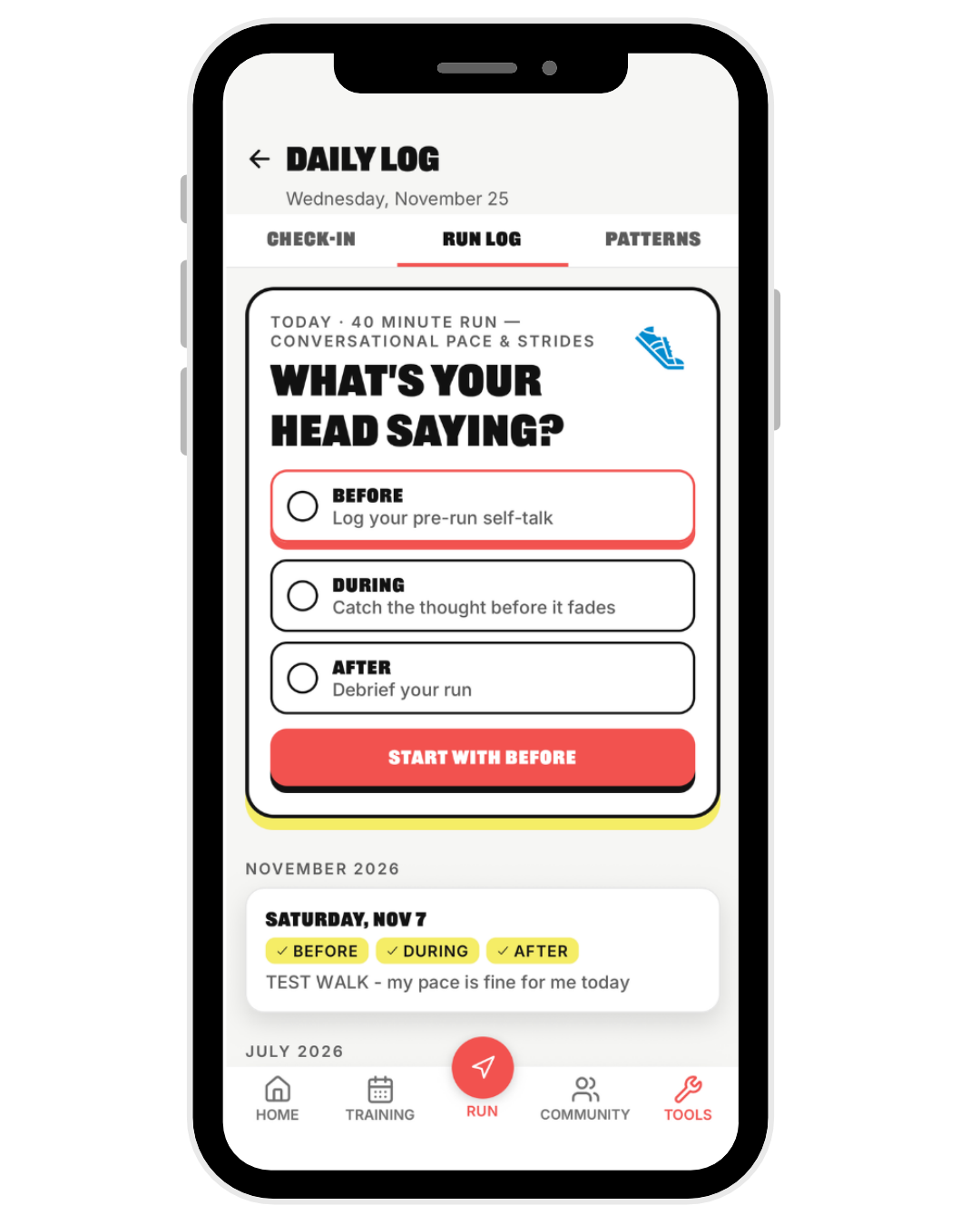
What the Daily Log Actually Is
A one-tap check-in in the BALG app: did you work out, what was your energy level, how did you sleep, any soreness, what's your mood. About 30 seconds, most days less. Not a journal — you tap buttons, maybe add a quick note if something was weird.
Why 30 Seconds Matters More Than It Sounds
Most habits and patterns run on complete autopilot. If we don't stop to notice them, it's easy to slip into "I'm not doing enough" spirals without ever seeing the actual pattern underneath:
You might feel amazing after 7+ hours of sleep and rough under 6 — but without tracking, you'll just feel rough without understanding why.
Soreness might always spike the week after a mileage jump — without tracking, that reads as injury instead of normal adaptation.
Energy might tank on speed-work afternoons — without tracking, you push harder instead of giving yourself grace.
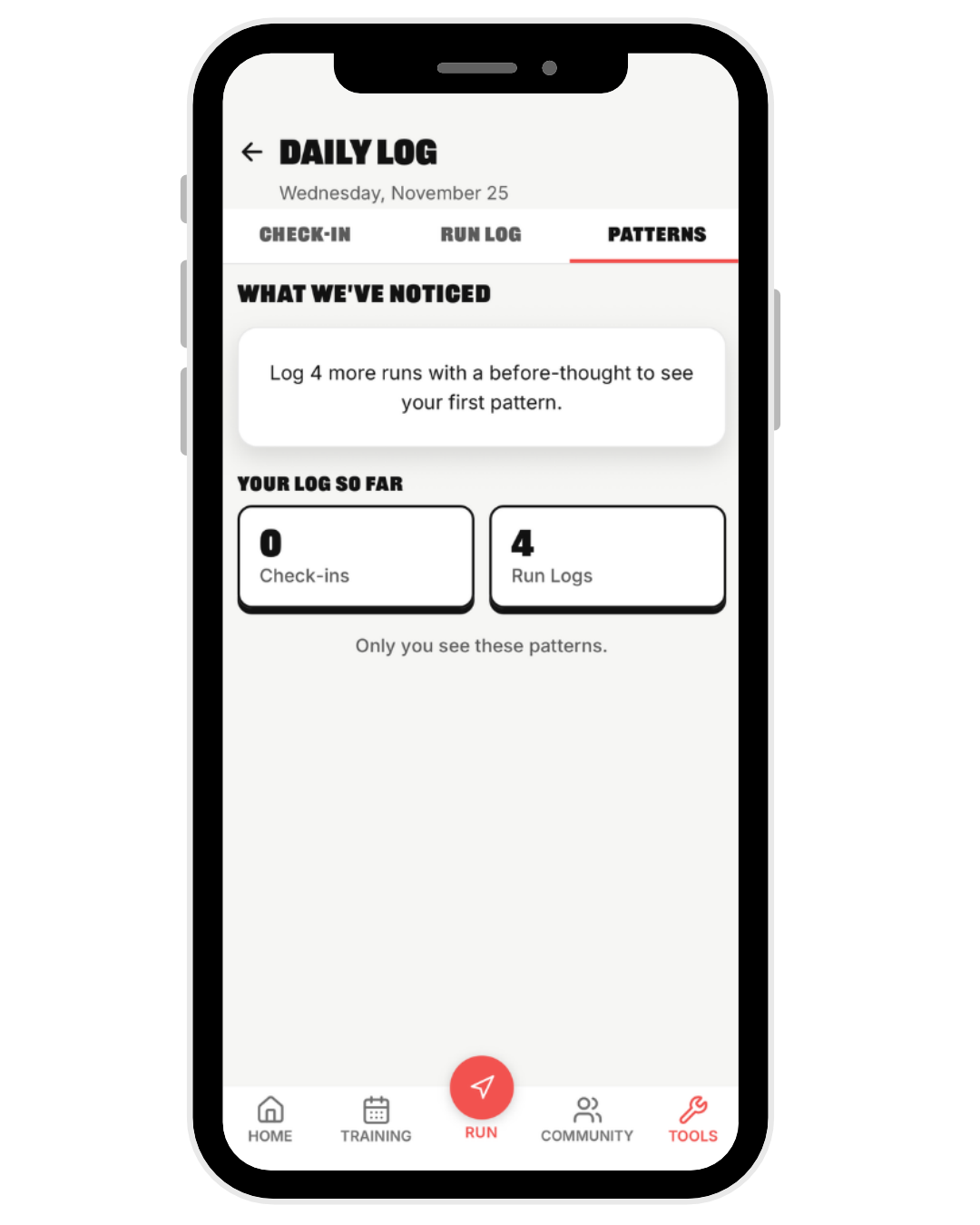
What It Gives You
Real patterns instead of guessing — after a few weeks, you can see "when I sleep 7+ hours, my workouts are better." That's evidence, not an assumption.
Actual context for your coach — "last week was rough" becomes "you had three nights under 6 hours of sleep, and your energy was down all week." Real context beats a foggy memory.
A record to look back on before a big race — seeing months of logged consistency is not motivational psychology, it's just evidence, and evidence is powerful.
A way to tell "tired from training" apart from "something's actually off" — if sleep and energy were solid and you still feel rough, that's a different signal than a hard week on bad sleep.
And most importantly, a way to identify accurate self-talk from inaccurate self-talk.
What It Does NOT Do
It's not a performance tracker — it doesn't replace your workout data, which lives elsewhere in the app. It's tracking the human stuff: sleep, mood, energy, soreness. And it's not a guilt trigger — missing a few days isn't a problem. Even logging 4-5 days a week is enough to start seeing trends.
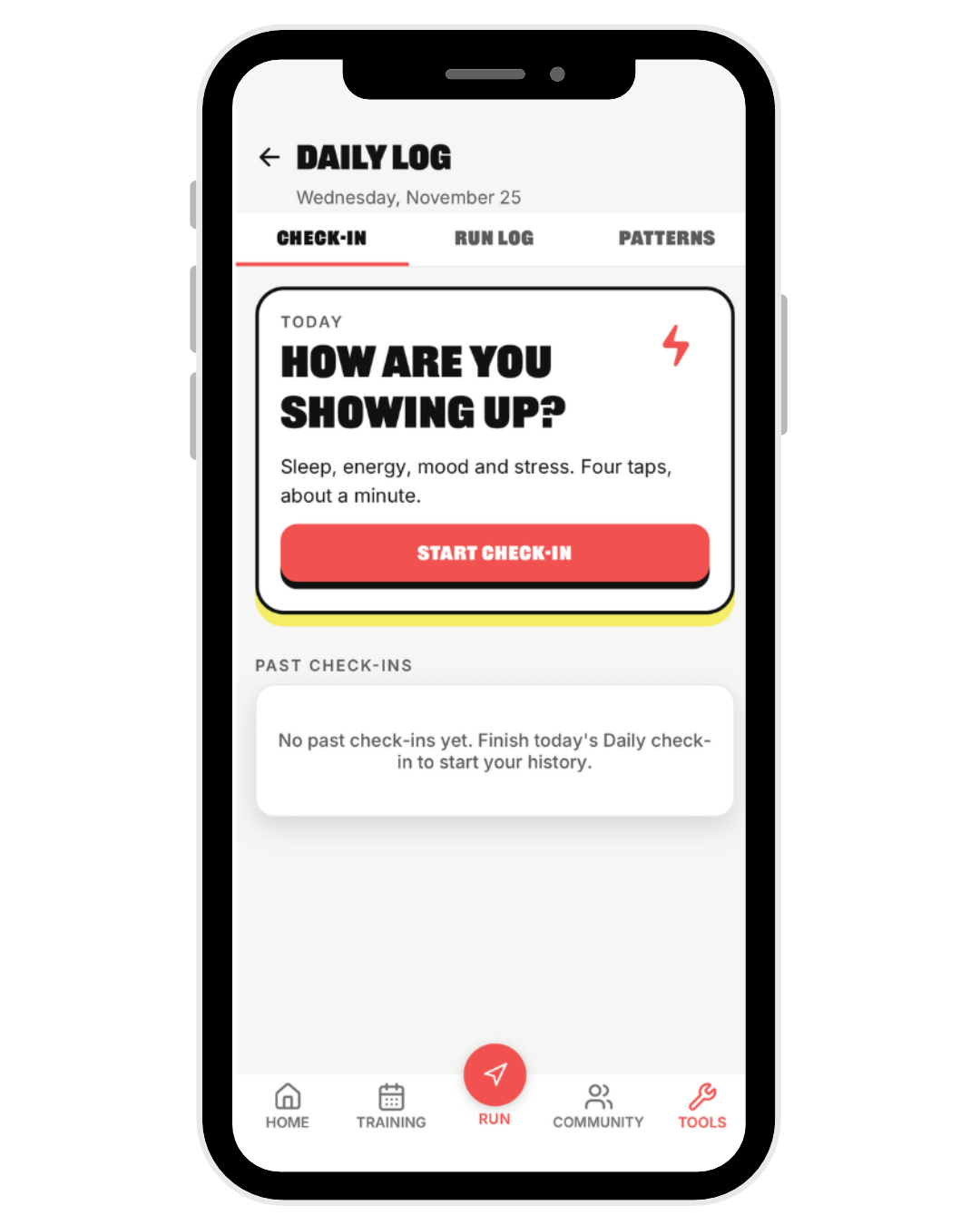
How to Actually Use It
Consistently log what you say to yourself before, during and after workouts — long runs and speed plays especially. So much of our self-talk happens without us being aware of it. I want you to take the time to really investigate what you say to yourself in the moment before, during and after runs.
Pick a consistent time — before bed works well (log sleep and mood, answer the workout question the next morning), or first thing in the morning. Consistency matters more than the exact time.
Keep answers simple — "good/okay/low," not paragraphs. These are data points, not journal entries.
Look back weekly — a Sunday scroll through the week's logs takes 30 seconds and often reveals a pattern.
Share it with your coach if you have one — it's real context for adjusting your plan.
Don't judge a bad week — a week of low energy and low sleep isn't failure, it's information that might mean you need a recovery week.
This is one of the most important features in the app. But it's the habit that makes every other tool work better, because it's built on real information instead of vibes.
The Daily Log is free to use for everyone in the Badass Lady Gang app — it's under Tools right now if you're on one of those. FREE? YES. For now, it’s free. Enjoy it!
— Coach Kelly
