

Can Running Help You Lose Weight?
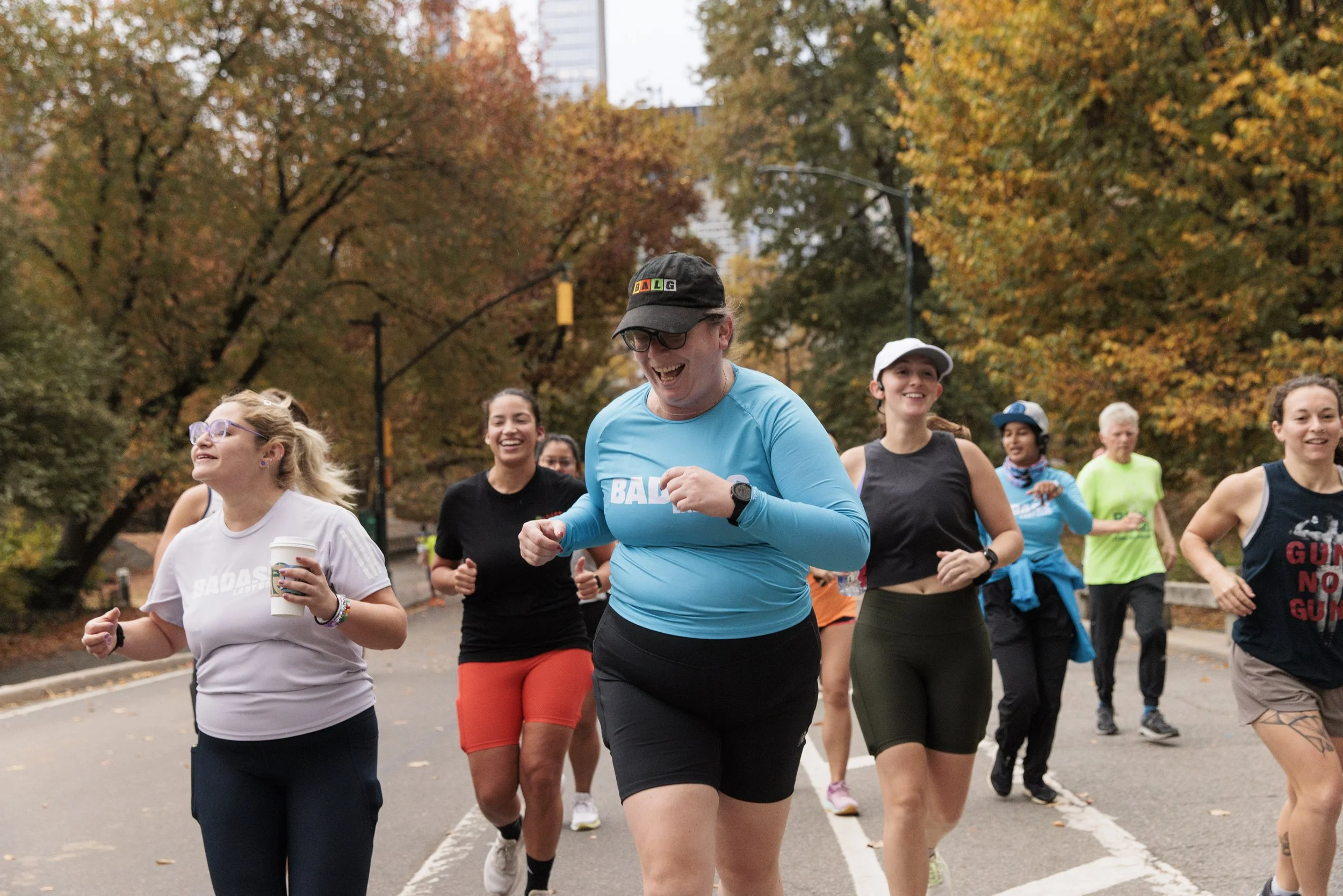
If you searched "can running help you lose weight," you're not alone. But before we dive into this question, let's talk about why you're asking it—and whether weight loss is actually the goal you think it is.
The Problem with Running for Weight Loss
Yes, running can lead to weight changes. But weight loss should never be your primary running goal.
Here's why.
Diet Culture's Grip on Running
We live in a world saturated with diet culture—a multi-billion-dollar industry that profits from convincing you that you're not good enough as you are. That your body is a problem to be solved. That a smaller body equals a better, healthier, happier life.
This is fatphobia (also called anti-fatness), and it's everywhere.
Fatphobia is: The implicit and explicit bias against people in larger bodies, rooted in blame and presumed moral failing. It's intrinsically linked to racism, classism, misogyny, and other systems of oppression. Fatphobia leads to inadequate healthcare, as medical providers often assume larger-bodied people can't be healthy, lack training in treating diverse body sizes, and maintain weight-related structural barriers like inadequate equipment.
Here's the truth that diet culture doesn't want you to know: You cannot tell how healthy someone is by looking at them.
Why Running for Weight Loss Is a Slippery Slope
When weight loss becomes your running goal, it creates a dangerous dynamic:
1. It promotes calorie deficit thinking. You start viewing running as "earning" food or "burning off" meals. This mindset can lead to under-fueling, which is especially dangerous for runners.
2. It can trigger Low Energy Availability (LEA). LEA occurs when you're not consuming enough calories to support both your basic bodily functions and your training. For female athletes especially, LEA can lead to hormonal disruptions, bone density loss, missing periods, increased injury risk, and long-term health consequences.
3. It turns running into punishment. Instead of discovering what your body can do, running becomes something you have to do to control your body. That's not sustainable, and it's definitely not fun.
4. It ignores what running actually offers. When you're fixated on the scale, you miss the incredible mental, emotional, and physical benefits that have nothing to do with your size.
Before You Start Running to Lose Weight, Ask Yourself This
Pause for a moment. Get curious about your motivation.
What do you hope to feel if you lost weight?
More energetic?
Stronger?
More confident?
Able to keep up with your kids or daily activities?
Less anxious or stressed?
Part of a community?
Accomplished?
Here's the revolutionary truth: You can achieve all of these feelings without losing a single pound.
Running can absolutely help you build strength, stamina, energy, and confidence. Your cardiovascular fitness will improve. You'll likely sleep better. You might notice your mood lifting. You'll discover capabilities you didn't know you had.
None of these benefits require weight loss.
The Question Behind the Question
If you're genuinely concerned about your health, that's worth exploring—but not through the lens of the scale.
Consider working with:
A therapist or social worker who specializes in body image, eating disorders, or Health at Every Size (HAES) approaches
A registered dietitian (not a nutritionist) who practices from a non-diet, HAES framework
These professionals can help you separate genuine health concerns from internalized fatphobia and explore what health actually means for your body.
What Running Can Actually Do for Your Body
Let's reframe this entirely.
Running is an opportunity to discover what you can do in your body—right now, exactly as you are.
The Physical Benefits (That Aren't About Size)
Cardiovascular health improvements: Lower blood pressure, improved cholesterol levels, reduced risk of heart disease
Stronger bones and muscles: Weight-bearing exercise builds bone density and muscular strength
Better sleep quality: Regular runners often report falling asleep faster and sleeping more soundly
Improved insulin sensitivity: Your body becomes more efficient at regulating blood sugar
Enhanced immune function: Moderate exercise supports your immune system
Increased stamina and energy: Daily activities become easier as your fitness improves
The Mental and Emotional Benefits
Stress relief and anxiety reduction: Running is proven to lower cortisol and boost mood-regulating neurotransmitters
Sense of accomplishment: Setting and achieving process-based goals builds genuine confidence
Mental clarity: Many runners describe their runs as "moving meditation"
Community connection: Finding your running people creates belonging and support
Body appreciation: When you focus on what your body can do rather than how it looks, your relationship with your body transforms
Body Changes: What to Expect (and Why It Doesn't Matter)
Will your body change if you start running? Probably. Bodies change constantly—that's what bodies do.
You might notice:
Muscle definition in your legs
Changes in how your clothes fit (and not always "smaller"—sometimes runners size up as they build muscle)
Weight fluctuations (running increases muscle mass, which weighs more than fat)
Your weight staying exactly the same while your fitness improves dramatically
Your weight is not a measure of your running success. Period.
Two runners can be the exact same weight, run the same pace, and have completely different body compositions, fitness levels, and health markers. The scale tells you almost nothing useful about your health or your running.
Ditch the Scale
Seriously. Throw it away. Donate it. Use it as a doorstop.
There are countless meaningful goals you can chase that don't involve a number on a scale:
Run continuously for 30 minutes
Complete a 5K
Run up that hill in your neighborhood without stopping
Negative split a race (run the second half faster than the first)
Strength train twice a week for three months
Run consistently through a full training cycle
Beat a personal record at any distance
These are process goals—actions you take and habits you build—rather than outcome goals tied to how your body looks.
The Right Reasons to Run
If you're going to start running, do it for reasons that will sustain you when training gets hard (because it will).
Run because:
You want to get stronger physically and mentally
You crave accomplishment and want to prove something to yourself
You're looking for community and connection with other women
You want something to look forward to in your routine
You're curious about what you're capable of
These are the motivations that will carry you through early morning runs, challenging workouts, and the inevitable tough days. Weight loss motivation fizzles out. Curiosity and self-discovery? Those keep you coming back.
Running Is About Discovery, Not Transformation
Here's what we believe at Badass Lady Gang:
You don't need to transform your body to be worthy of respect, love, healthcare, or opportunities. You're pretty great just the way you are.
Running isn't about becoming someone else. It's about discovering who you already are and what you're capable of—in the body you have right now.
When you approach running from a place of curiosity rather than punishment, everything changes. You start to:
Listen to your body instead of overriding its signals
Fuel adequately because you understand you need energy to perform
Rest when you're tired instead of pushing through
Celebrate effort and consistency over outcomes
Build actual, lasting confidence
Ready to Start Running for the Right Reasons?
If this resonates with you—if you're ready to explore running from a body-neutral, curiosity-driven perspective—we'd love to have you in the Badass Lady Gang community.
Starting from scratch? Try our free Become A Runner / Get Back To Running 5K Training Plan. It's an 8-week program with audio-guided runs designed to make you laugh, think, and build your running base without obsessing over pace or weight.
Want more support? Check out our Build Your Base Training Experience—a free 12-week program that teaches you the fundamentals of sustainable, educated running.
Looking for community? Join the BALG Training Team for group coaching, weekly Zoom calls, and a judgment-free space to ask questions and grow as a runner.
The Bottom Line
Can running help you lose weight? Maybe. But more importantly: Should weight loss be your running goal? Absolutely not.
Running offers so much more than a smaller body. It offers strength, community, accomplishment, mental clarity, and the chance to discover what you're truly capable of.
Your body will change throughout your running journey—and throughout your life. That's normal and okay. But health is not a look. It's a lifestyle. And running can be part of a healthy, joyful lifestyle at any size.
So put on your curiosity goggles. Silence the diet culture noise. And discover what running can do for you, not to you.
You're pretty great just the way you are.
Fuck dieting and fuck diet culture.
Ready to ditch the scale and discover what you're capable of? Join the free Couch to 5K program and start your running journey today.
