

How Running Improves Mental Health
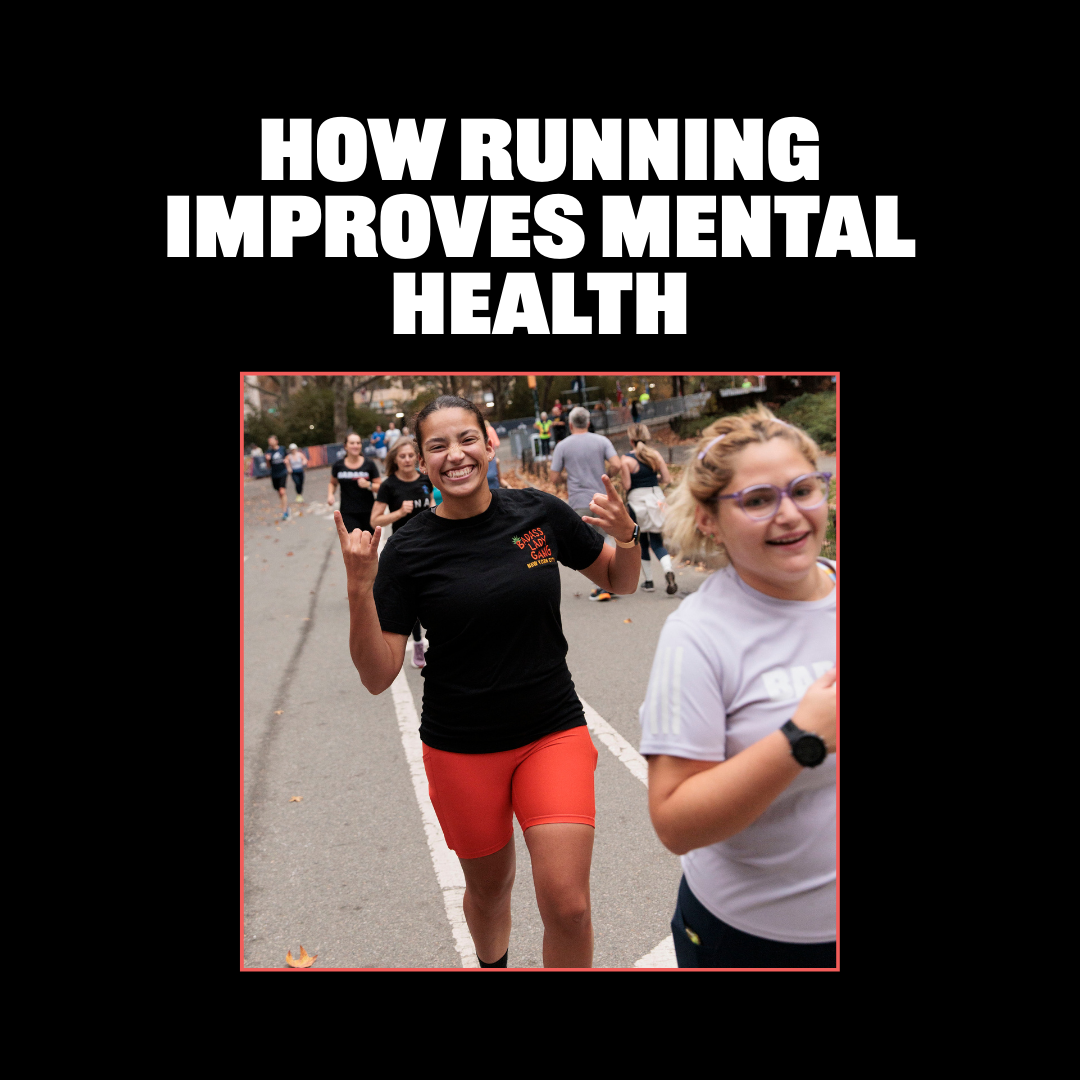
Look, I'm not going to tell you that running will magically cure everything that's weighing on your mind. But what I will tell you is that the relationship between running and mental health is backed by some seriously compelling science—and when you combine that with proven sports psychology and cognitive behavioral therapy (CBT) principles, you've got a powerful toolkit for real, lasting change.
Let's dive into how running actually rewires your brain, and more importantly, how to use it intentionally to improve your mental health.
The Brain Chemistry Magic (It's Real, Y'all)
When you run, your brain releases a cocktail of feel-good chemicals: endorphins, endocannabinoids, dopamine, and serotonin. But here's what most people don't know—that "runner's high" isn't just about feeling good in the moment. Regular running actually changes your brain's structure and chemistry over time.
Research shows that aerobic exercise increases the volume of your hippocampus (the part of your brain responsible for memory and emotional regulation), reduces inflammation that's linked to depression, and literally grows new brain cells through a process called neurogenesis. Pretty badass, right?
The Sports Psychology Principles That Make Running a Mental Health Game-Changer
1. Mastery Experiences Build Self-Efficacy
Sports psychologist Albert Bandura's concept of self-efficacy—your belief in your ability to succeed—is one of the most powerful predictors of mental health and resilience. And running? It's a self-efficacy building machine.
How to use this principle:
Set process goals instead of outcome goals. Instead of "run a 10-minute mile," try "run consistently three times per week for a month."
Track your progress in a way that shows growth, even small wins
Celebrate effort and consistency, not just PRs
Start with challenges you know you can achieve, then gradually increase difficulty
When you prove to yourself over and over that you can do hard things, that confidence spills into every other area of your life.
2. The Power of Routine and Behavioral Activation
In CBT, behavioral activation is a cornerstone treatment for depression. The principle? When we're struggling mentally, we tend to withdraw from activities. But engaging in meaningful activities—especially physical ones—actually improves mood more effectively than waiting to "feel like it."
How to use this principle:
Schedule runs like non-negotiable appointments
Start stupidly small if you need to—even 5 minutes counts
Notice how you feel after running, not just before (spoiler: you'll almost always feel better)
Use running as evidence against the thought "nothing helps"
The beautiful thing about running is that it gets you moving even when your brain is telling you to stay in bed. And movement creates momentum.
3. Mindfulness in Motion
Running can be a form of moving meditation, which combines the mental health benefits of both practices. Research shows that mindful running reduces rumination (that endless loop of negative thoughts) and increases present-moment awareness.
How to use this principle:
Practice body scans while running: notice your breath, the feeling of your feet hitting the ground, the rhythm of your stride
When anxious thoughts pop up, acknowledge them and return focus to physical sensations
Use your breath as an anchor—especially on easy runs, focus on breathing deeply and rhythmically
Leave the watch behind sometimes and run purely by feel
I teach this in my coaching all the time: when you're fully present in your body during a run, there's less mental space for anxiety and worry.
4. Cognitive Reframing and Mental Toughness
Sports psychology teaches athletes to reframe challenging situations, and running gives you countless opportunities to practice this skill. That voice that says "I can't do this" during a tough workout? That's the same voice that says you can't handle difficult situations in life.
How to use this principle:
Catch negative self-talk during runs and challenge it
Reframe discomfort as temporary and manageable: "This is hard, AND I can handle hard things"
Practice positive self-talk: replace "I'm so slow" with "I'm building my base"
Use runs to prove that discomfort doesn't equal danger
Every time you push through a challenging mile, you're teaching your brain that you're capable of more than you think.
5. Social Connection and Community
Humans are wired for connection, and isolation is one of the biggest risk factors for poor mental health. Running communities provide built-in social support, accountability, and a sense of belonging.
How to use this principle:
Join a running group or online community (shameless plug: the Badass Lady Gang community is built exactly for this purpose!)
Find an accountability partner for weekly runs
Share your struggles and victories—vulnerability builds real connection
Show up for others, even when you don't feel like showing up for yourself
The research is clear: social support is one of the most protective factors for mental health. Running gives you a reason to connect with others who get it.
The CBT Tools That Pair Perfectly with Running
Thought Records on the Run
CBT uses thought records to identify and challenge distorted thinking patterns. Running gives you the perfect opportunity to practice this in real-time.
Try this: When a negative thought pops up during a run, mentally note:
The situation (mile 3 of my tempo run)
The automatic thought ("I'm failing, I can't keep this pace")
The emotion and intensity (frustration, 7/10)
Evidence for and against the thought
A more balanced thought ("This pace feels hard today, but I've trained for this. I can adjust if needed.")
Exposure Therapy for Anxiety
Running can be a form of exposure therapy—gradually facing feared situations in a controlled way. If anxiety tells you that an elevated heart rate means danger, running teaches you that your body can handle it.
Try this: Use runs to practice tolerating physical sensations that anxiety mimics—increased heart rate, heavy breathing, sweating. Notice that these sensations are safe and temporary.
Values-Based Living
CBT emphasizes living according to your values rather than your moods. Running becomes a practice in committed action—doing what matters even when it's hard.
Try this: Identify why running matters to you beyond weight loss or performance. Is it about resilience? Self-care? Freedom? Use that value to motivate you when discipline needs to show up instead of motivation.
The Real Talk: Running Isn't Therapy (But It's a Damn Good Tool)
Here's what I want you to hear: if you're struggling with your mental health, running can be an incredibly powerful part of your wellness toolkit—but it's not a replacement for professional help when you need it. Think of running as a complement to therapy, medication, or other mental health support you might need.
The magic happens when you run with intention. Not just to escape your thoughts, but to strengthen your mind. Not just to feel good temporarily, but to build lasting resilience.
Your Action Plan: Start Building Your Mental Health Through Running
Ready to use running as a tool for mental wellness? Here's where to start:
Commit to consistency over intensity. Three 20-minute easy runs per week will do more for your mental health than one brutal workout.
Track your mental state pre- and post-run. Use a simple 1-10 scale for mood and anxiety. You'll have data proving it helps.
Practice one sports psychology principle per run. This week? Focus on mindfulness. Next week? Work on cognitive reframing.
Find your people. Whether it's an in-person running group or an online community, connection amplifies the mental health benefits.
Be patient with the process. The neurological changes take time. Trust that every run is an investment in your mental health, even when it doesn't feel transformative in the moment.
Look, running won't fix everything. But it will give you a space to practice being uncomfortable and discovering you can handle it. It'll teach you that your thoughts aren't facts, that your body is capable and strong, and that showing up for yourself—even when it's hard—builds the kind of confidence that changes everything.
So lace up those shoes. Your brain will thank you.
Want support on your running journey? Our Badass Lady Gang Training Team combines evidence-based training with the kind of supportive, body-positive environment where real confidence grows. Check out our free Build Your Base Training Experience or Free 8-Week Couch to 5K Training Plan to start building both physical and mental strength.
